


From fragmented data to trusted action.
Persivate helps organizations build connected data foundations spanning strategy, engineering, cloud data platforms, analytics, governance and AI-ready data turning information into better decisions, products and operations.
Applications

Databases
Cloud
Spreadsheets
APIs
Documents
Devices
Legacy
The problem is not a shortage of data.
It is a shortage of data people can connect, understand, trust and use when a decision needs to be made.

Silos & duplicate information
Business applications, files and data platforms hold overlapping versions of the same entities and events.
01

Manual reporting & reconciliation
Teams spend time finding, cleaning and comparing information instead of interpreting what it means.
02

Inconsistent definitions
Metrics vary across dashboards because ownership, calculation logic and context remain implicit.
03

Complex, fragile pipelines
Data movement becomes difficult to test, observe and change as sources and business needs evolve.
04

Governance & lineage gaps
People cannot easily see where data came from, what it means or whether they are allowed to use it.
05

AI readiness constraints
AI exposes weaknesses in accessibility, reliability, structure, context and governance that reporting can sometimes hide.
06
Teams should spend less time preparing data and more time using it to improve the business.
Design the complete path from creation to action.
A warehouse or lakehouse is one part of the system. The larger objective is to make data useful for analytics, automation, AI, digital products and operational decisions.







01
Create
Understand where data begins.
Identify the business events, systems and human activities that create information and the context that gives it meaning.

Context
Business events
02
Capture
Capture information with its context.
Acquire relevant data from applications, databases, APIs, documents, devices and external sources with appropriate controls.
Ingestion
Validation
Metadata
03
Integrate
Connect sources & domains.
Move data through batch, streaming, API and event patterns while making dependencies and ownership visible.
Batch
Validation
Streaming
Events
04
Transform
Turn raw data into useful models.
Clean, enrich, standardize and model information around shared definitions and intended analytical or operational use.
Quality
Transformation
Modeling
05
Govern
Create trust & responsible access.
Establish ownership, catalog, lineage, classification, policies and security throughout the lifecycle.
Ownership
Lineage
RBAC
Policy
06
Analyze
Create insight people can use.
Enable reporting, self-service analytics, advanced models and real-time intelligence around business decisions.
BI
Analytics
Prediction
07
Act
Put intelligence into the workflow.
Connect insight to decisions, applications, automation and measurable operational action.
Decisions
Automation
Products
Choose the architecture around the work.
Select an architecture pattern to explore the value it can provide. The right design may combine patterns based on workload, ownership, latency, scale and governance.
Data lake
Data Warehouse
Lakehouse
Data Mesh
Real-time Platform

Store diverse data at scale
Data lake
Create a flexible foundation for structured and unstructured information, with governance and discoverability designed into how data is ingested and used.

Diverse data types
Scalable storage
Schema flexibility
Governed discover

Support structured analytics and reporting
Data warehouse
Organize modeled, quality-controlled data around consistent business definitions for repeatable reporting and analysis.
Business models
Governed metrics
BI performance
Historical analysis

Bring engineering, analytics and AI together
Lakehouse
Combine flexible data storage with managed tables, governance and performance for multiple analytical and AI workloads.
Unified workloads
Open formats
Governance
ML and analytics

Organize ownership around business domains
Data mesh
Treat data as a product with domain accountability and shared platform standards where organizational scale and structure justify it.
Domain ownership
Data products
Federated governance
Shared platform
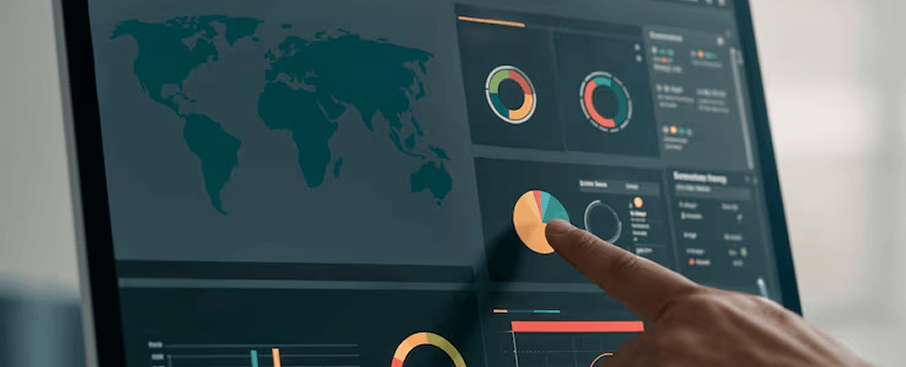
Enable operational and event intelligence
Real-time data platform
Process continuous data and business events where the value of insight depends on responding in minutes or seconds.
Streaming
Events
Low latency
Operational action
From strategy to dependable data products.
Persivate connects advisory, engineering, platform, governance and analytics work so data capabilities can be operated not merely launched.
Data strategy & roadmap
Design ingestion, storage, modeling, security, performance and migration across suitable data-platform patterns.

Data engineering & integration
Build batch, streaming, API and event-driven pipelines with transformation, orchestration, quality and monitoring.

Cloud data platforms
Design ingestion, storage, modeling, security, performance and migration across suitable data-platform patterns.
Data quality & governance
Establish ownership, catalog, metadata, lineage, classification, access, policies and stewardship throughout the lifecycle.
Analytics & business intelligence
Create executive, operational, self-service, embedded and interactive experiences organized around decisions.

Data & analytics modernization
Modernize warehouses, ETL, models, pipelines, governance and analytics without losing critical business context.
Engineer quality into the lifecycle.
Quality is not a cleanup step. Define it with business owners, measure it where data moves, and make exceptions visible.

Accuracy
Is the data correct for its intended use?

Completeness
Is the required information present?

Consistency
Does data mean the same thing across systems?

Timeliness
Is the information available when needed?

Uniqueness
Are duplicate records understood and controlled?

Validity
Does data conform to agreed rules and formats?
The right people should be able to find, understand and securely use the right data.
Ownership
Catalog
Metadata
Lineage
Classification
Access controls
Stewardship
Policies
Move beyond static reporting.
Select the business question. Each level builds on trusted data and adds a different analytical capability.
DESCRIPTIVE
What happened?
DIAGNOSTIC
Why did it happen?
PREDICTIVE
What is likely?
PRESCRIPTIVE
What should we do?

Create a shared view of performance.
Use governed measures and accessible reporting to understand events, trends, outcomes and current operating conditions.
Executive dashboards
Executive dashboards
Operational analytics
Interactive reporting
Find the drivers behind the
result.
Combine drill-down, segmentation and contextual analysis to identify patterns, relationships and likely root causes.
Variance analysis
Segmentation
Root-cause exploration
Process analysis


Anticipate the next likely
outcome.
Use statistical and machine-learning models to estimate demand, behavior, risk or operational conditions.
Forecasting
Risk scoring
Demand prediction
Anomaly detection
Connect intelligence to a
decision.
Use predictions, constraints and business objectives to recommend or automate an appropriate next action with oversight.
Decision support
Optimization
Next-best action
Automation

AI makes data readiness impossible to ignore.
A trusted foundation provides the accessible, relevant, reliable, governed and context-rich information required for machine learning, GenAI, RAG, agents and intelligent automation.

Accessible
Relevant
Reliable
Governed
Well-structured
Context-rich
Traceable
Securely usable
Trusted information
Intelligence

Action
Improvement
Start with the decision or operation to improve.
The architecture and analytics pattern should follow the business question, required speed and action that comes next.
Customer
Operations
Risk & finance
Supply chain
Products & assets

Connected Capabilities
Trusted data makes intelligence actionable.
Connect the data foundation to AI, automation and enterprise applications so insight can become the next best action.
Artificial Intelligence & Gen AI
Move from AI experimentation to production-ready capabilities embedded in real work.

Intelligent Automation
Use trusted information and decisions inside connected, automated workflows.

Cloud & infrastructure
Create the scalable, secure operating foundation for modern data platforms.
Frequently Asked Questions
Data, made practical.
Do you only build data warehouses?
No. The capability spans data strategy, engineering, integration, platforms, governance, analytics, modernization and AI-ready data.
Can you modernize a legacy data environment?
Yes. We can assess the current estate and develop a roadmap across warehouses, ETL, cloud migration, lakehouse patterns, pipelines, models, governance and analytics based on business priorities and technical constraints.
Can you support real-time analytics?
Yes. Streaming and event-driven architectures can be designed where decisions or operational responses require intelligence in minutes or seconds.
How is governance incorporated?
Ownership, quality, cataloging, metadata, lineage, classification, access and policies can be designed into platform architecture and delivery workflows rather than treated as a separate documentation exercise.
How does a data foundation support AI?
It provides the information, context, traceability and governance required to ground, evaluate and operate AI applications. The exact data design depends on the AI use case and risk profile.
Turn data into a business capability.
Whether you need to modernize the platform, improve analytics, establish governance or prepare for AI, start with the business decisions your data needs to support.