


Modernize what matters. Preserve what works.
Your Legacy applications hold vital business knowledge. Modernize them in manageable stages without disrupting critical operations.
Process discovery

Workflow design
Integration
AI + RPA
Human oversight
Continuous improvement
Applications built for another era are shaping today’s choices.
Legacy does not automatically mean obsolete. The problem begins when application constraints slow change, increase risk or prevent the business from using modern data, cloud and AI capabilities.

High Maintenance Effort
Budgets and specialist capacity are absorbed by keeping aging platforms stable.

Slow Release Cycles
Tightly coupled code and fragile dependencies make every change harder to deliver.

Difficult Integration
Closed architectures create manual work and limit connection to modern ecosystems.

Technology & Security Risk
Unsupported components, skills scarcity and accumulated debt reduce resilience.

Constrained Experiences
Old interfaces and duplicated functionality frustrate customers and employees.

Limited Data & AI Readiness
Inaccessible logic and fragmented data make new intelligence difficult to apply.
Not every legacy application needs replacing.

The objective is not newer technology for its own sake. It is an application estate that supports the business with the right balance of value, cost, risk and adaptability.
Every application deserves a different strategy.
Select a pathway to see when it may fit. The final decision is based on business criticality, technical condition, dependencies, economics and future requirements.
Retain
Retire
Rehost
Replatform
Refactor
Rearchitect
Replace
R7
Understand the estate before changing it.
A fact-based assessment makes trade-offs visible and creates a modernization sequence that stakeholders can understand, fund and govern.
What we assess
We bring business and technology signals together rather than judging an application by its age or stack alone.
Business criticality
Architecture
Security exposure
Run cost
Integration complexity
Technical debt
Dependencies
Performance
Skills availability
Future requirements
Turn evidence into a portfolio decision.
Each application can be placed against business value and technical condition to guide investment conversations.

Invest
High value · Strong foundation

Modernize
High value · Constrained foundation

Maintain
Focused value · Stable foundation

Consolidate / Retire
Limited value · High friction
Modernization from decision to durable operation.
Persivate connects portfolio strategy, architecture and engineering so each increment creates usable value and moves the estate toward its target state.
Business case
Roadmap
Portfolio

01
ASSESS
Application Portfolio Assessment
Evaluate value, cost, condition, risk and dependencies to define rationalization and modernization priorities.
02
TRANSFORM
Application & Data Modernization
Modernize monoliths, legacy code and databases through targeted refactoring, replatforming or re-architecture.
Architecture
Database
Code
Platforms
Containers
Cloud
03
MIGRATE
Cloud Migration & Platform Adoption
Move workloads using the strategy that fits their economics, risk profile and operating requirements.
04
CONNECT
API & Integration Modernization
Expose capabilities and connect legacy applications with modern platforms, services and event-driven ecosystems.
Integration
Events
APIs
UX
Mobile
Web
05
EXPERIENCE
Experience Modernization
Improve customer and employee journeys with modern interfaces supported by dependable foundations.
06
ENGINEER
Modernization Engineering
Embed testing, delivery automation, security and observability into the way modernized applications are built and run.
Operations
Testing
DevSecOps
Move in stages. Keep the business moving.
Modernization is sequenced by value and risk, with continuity, security and validation designed into every stage.
Understand
Decide
Sequence
Design
Modernize
Validate
Transition
Improve

Understand the application estate.
Build a shared view of applications, technology, dependencies, cost, risk and business importance.
Determine what should change.
Use evidence to decide what stays, changes, consolidates or retires and why.

Sequence by value & risk.
Create manageable increments with clear dependencies, decision points and measurable outcomes.
Define the target architecture.
Design the application, data, integration, security and operating model needed for the future state.

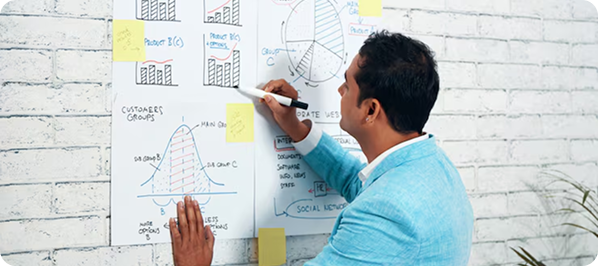
Execute the selected strategy.
Rehost, replatform, refactor, rearchitect or replace using repeatable modernization engineering.
Validate before transition.
Test functionality, data, performance, security, resilience and operational readiness.

Move into the target environment.
Transition users, workloads and operations with continuity, support and rollback considered.
Monitor & continuously improve.
Measure the new environment and use operational evidence to guide the next increment.

Use AI where it improves the engineering work.
GenAI can assist selected modernization activities, but generated outputs still require engineering review, testing and controls appropriate to the application.
Accelerate, validate, govern
AI supports the team. It does not replace engineering accountability.
Apply intelligence to understand complex estates and reduce repetitive modernization effort.
01
Code Analysis
Surface structure, patterns and areas that need deeper review.
02
Dependency Discovery
Assist mapping of relationships across code, services and data.
03
Documentation
Surface structure, patterns and areas that need deeper review.
04
Code Transformation
Support bounded conversion and refactoring tasks.
05
Test Generation
Draft test coverage to complement engineering quality practices.
06
Knowledge Extraction
Help recover business logic and institutional context.
Make modernization visible in business and engineering terms.

Run-Cost Movement
Track infrastructure, licensing, maintenance and support effort against the baseline.

Delivery speed
Measure release frequency, lead time and the effort required to make change.

Reliability & Resilience
Monitor availability, recovery, performance and production stability.

Risk Reduction
Make progress on unsupported dependencies, critical findings & operational concentration risk.

Integration Readiness
Assess how easily applications expose capabilities and exchange trusted information.

User Experience
Measure task success, adoption and service quality for the people who use the application.

Connected Capabilities
Modern applications need a connected foundation.
Combine modernization with the capabilities required to operate, automate and extend the new estate.
Artificial Intelligence & Gen AI
Prepare applications and data for practical, governed AI capabilities.
Intelligent Automation
Redesign and automate workflows that move across applications and teams.

Cloud & Infrastructure
Build the secure, resilient operating foundation for modern applications.
Frequently Asked Questions
Modernization without the mythology.
Does modernization always mean replacing the application?
No. The right path may be to retain, retire, rehost, replatform, refactor, rearchitect or replace. We determine the strategy from business value, technical condition, risk and future needs.
Can business-critical applications be modernized incrementally?
Yes. Incremental modernization can reduce disruption by separating capabilities, using stable interfaces and moving manageable slices into the target environment with defined validation and rollback plans.
Is cloud migration the same as modernization?
No. Cloud is one possible destination or enabler. Modernization may also involve architecture, code, data, integration, experience and engineering-practice changes or may not require cloud at all.
Can AI accelerate application modernization?
It can assist with activities such as code analysis, dependency discovery, documentation and test generation where the environment is suitable. Engineering validation, security controls and testing remain essential.
How do we decide where to start?
Start with a portfolio view. Applications creating significant business friction, technology risk or strategic constraints and where change is feasible often become the first candidates for deeper assessment.
Talk to an Engineer,Not
a Salesperson
Tell us what you're trying to build, migrate, automate, or keep running. You'll get a 30-minute call with someone who has shipped systems like yours, and an honest answer about fit.
Our work has thrived across borders.


Chat with Our Team


22 A, Takli Seem, Nagpur 440036
8 The Green STE A, Dover, Delaware, USA 19901
Address
Get in Touch
No newsletter. No drip campaign. A reply from a real person within one business day.